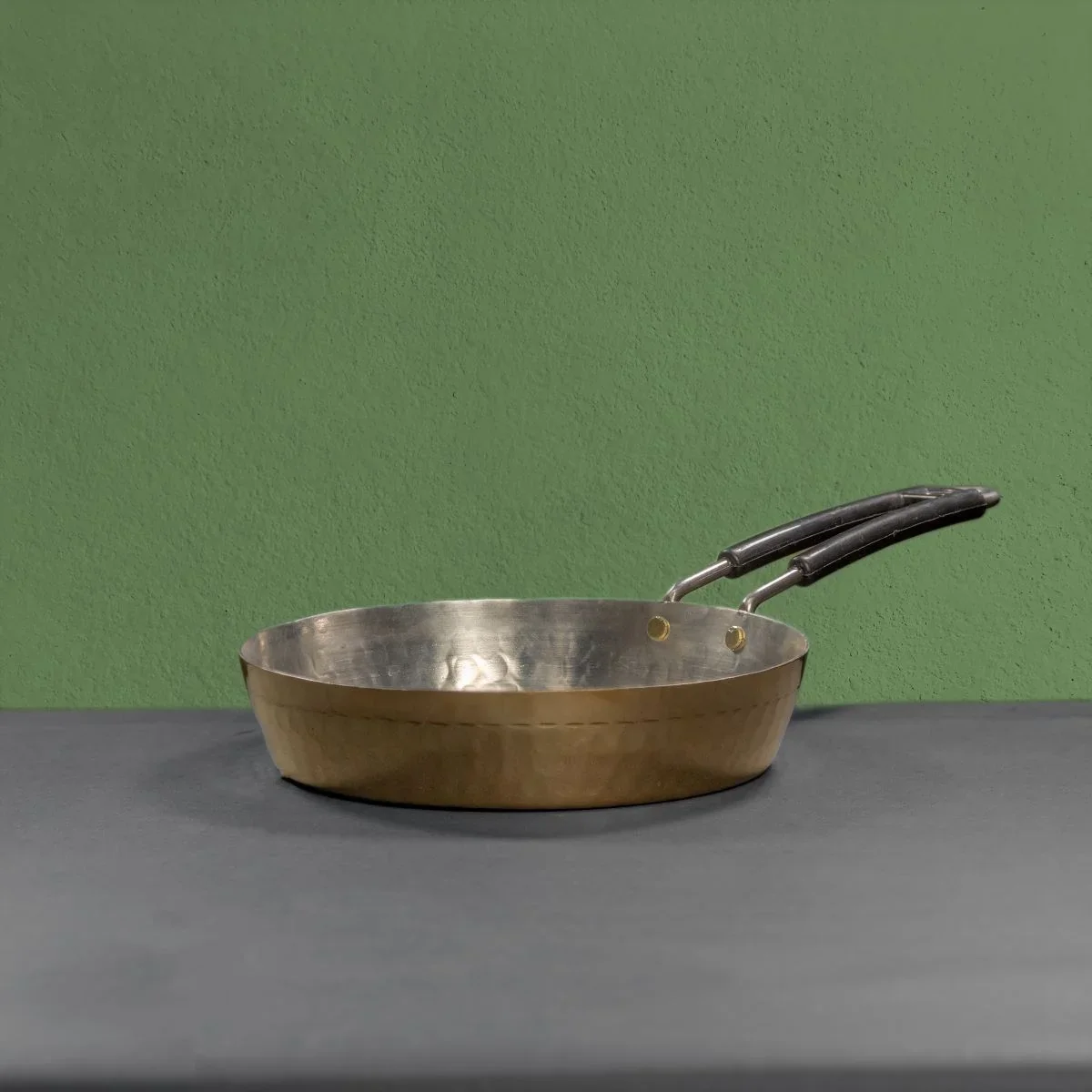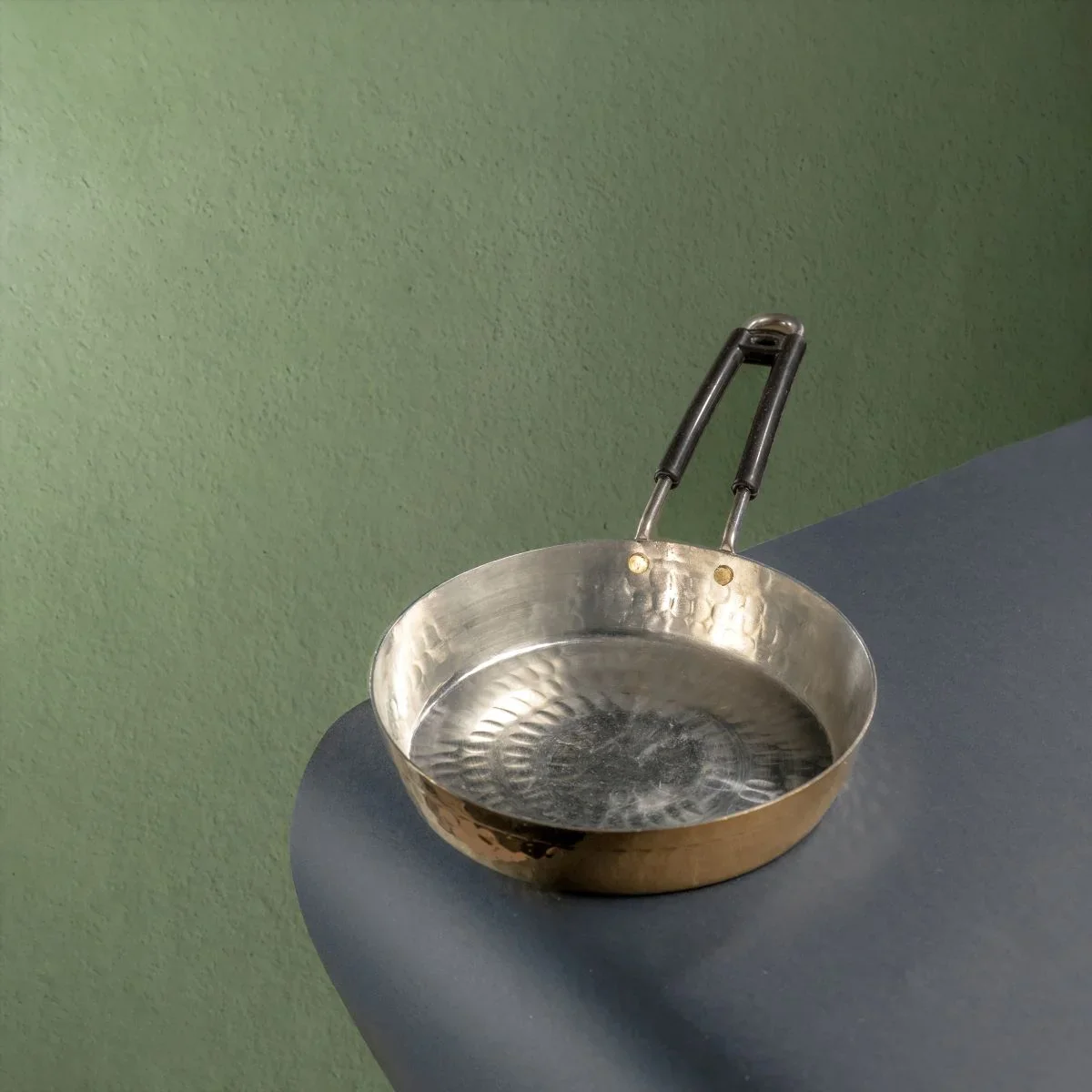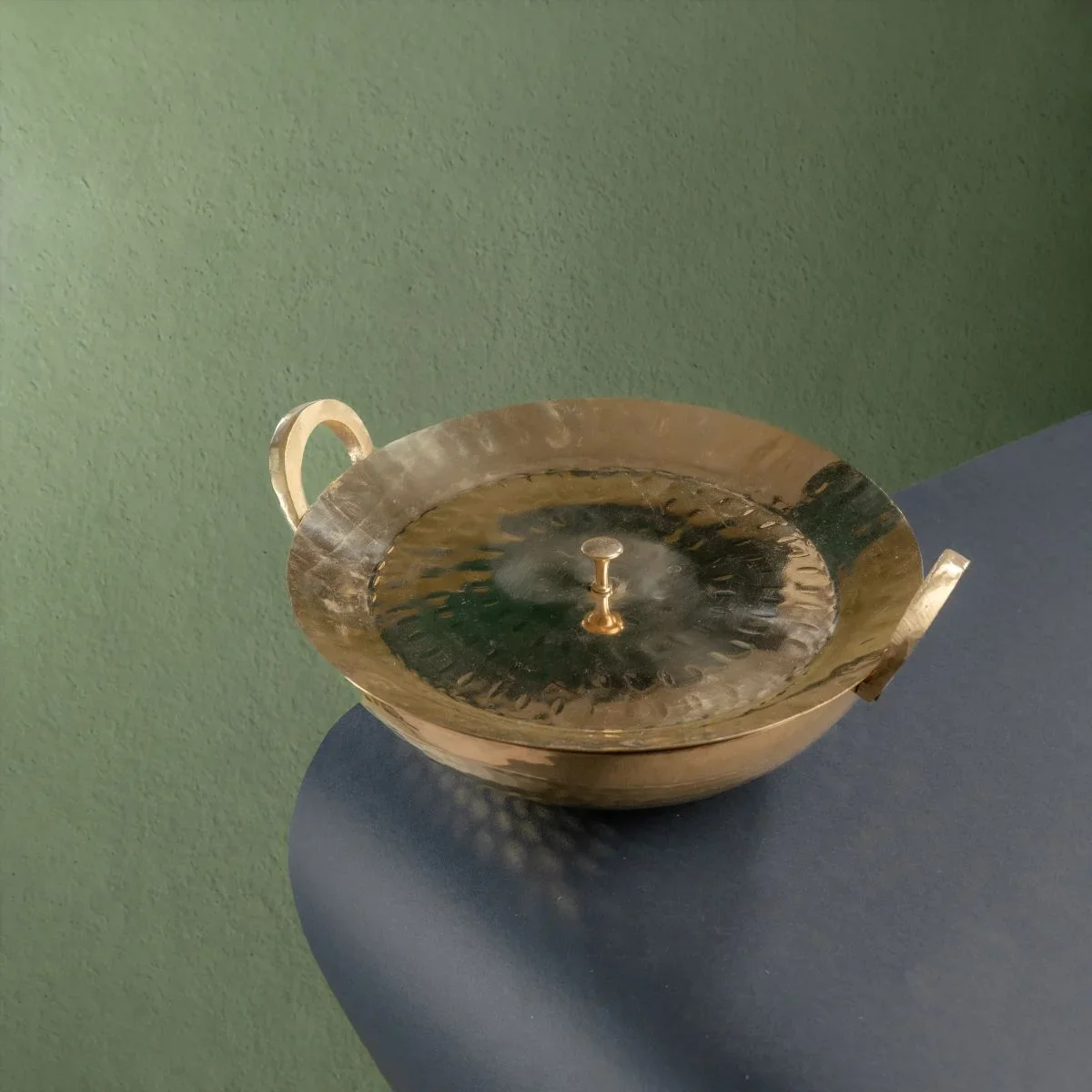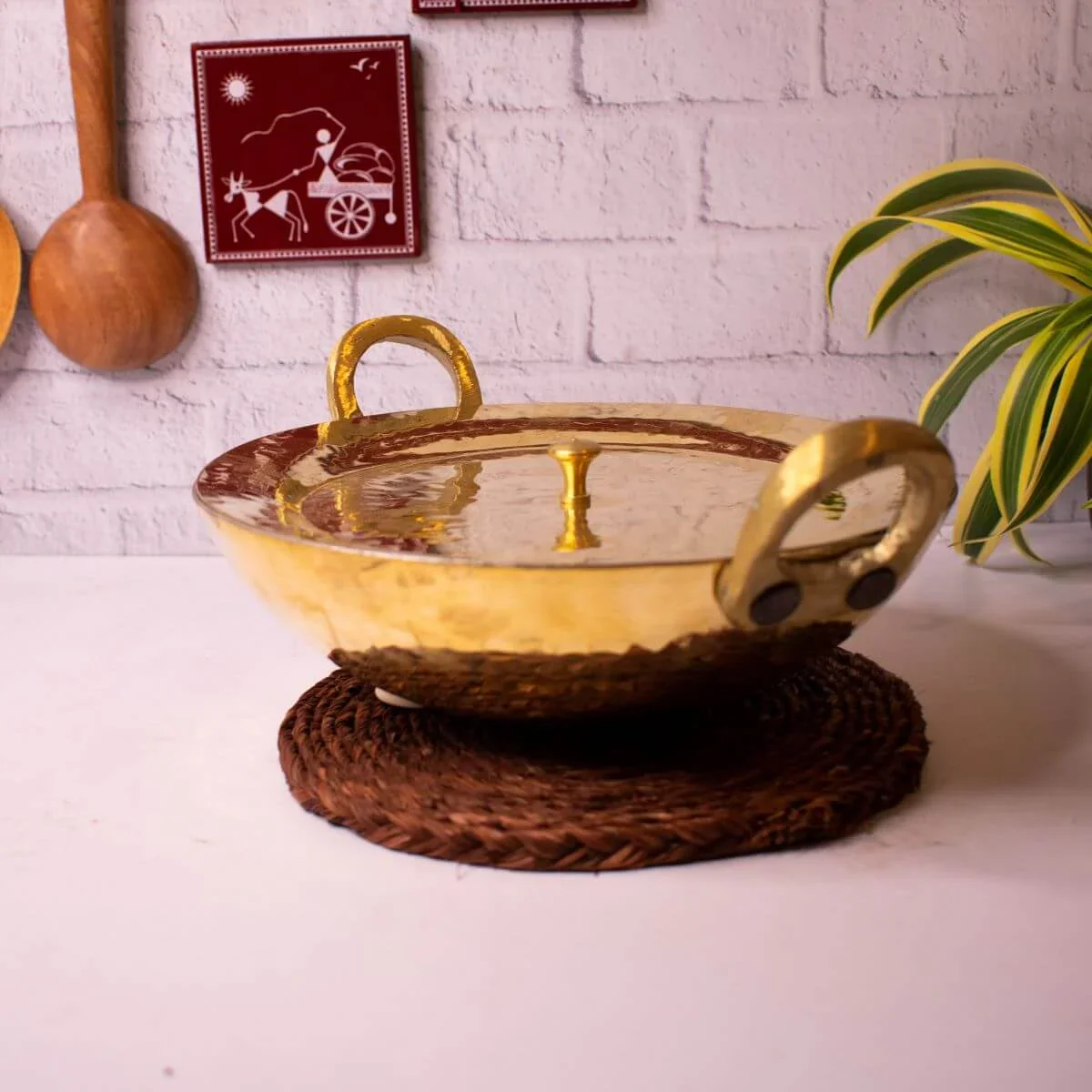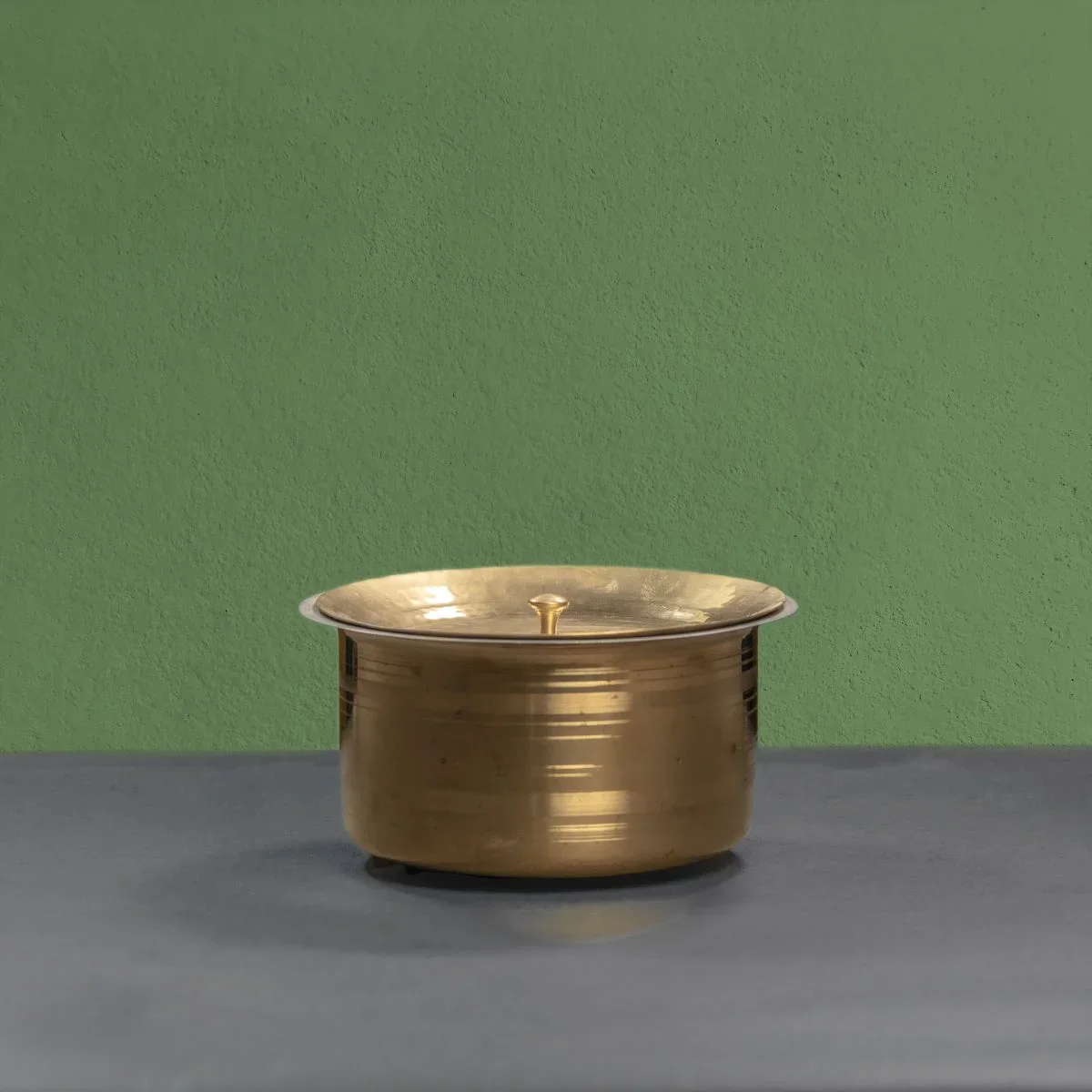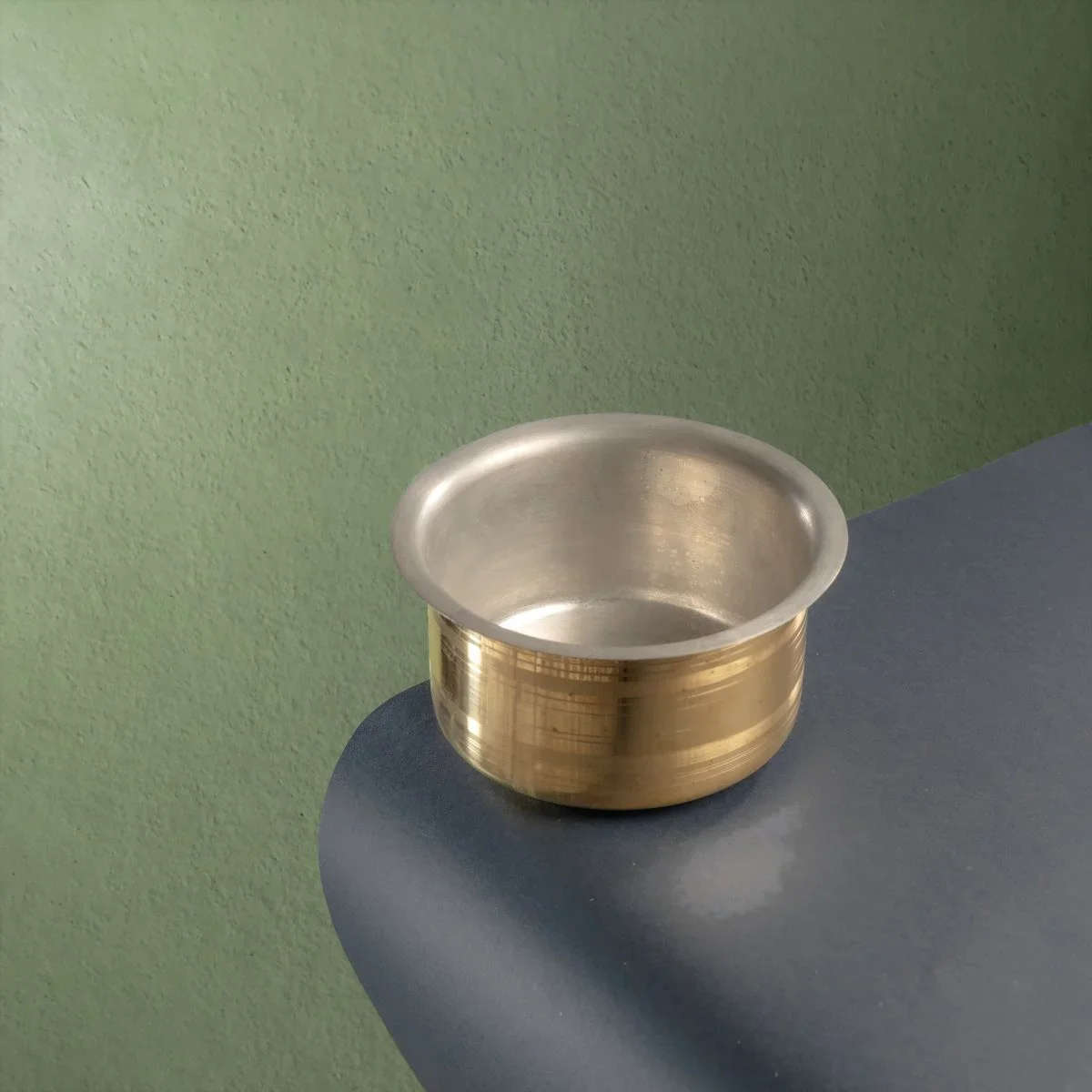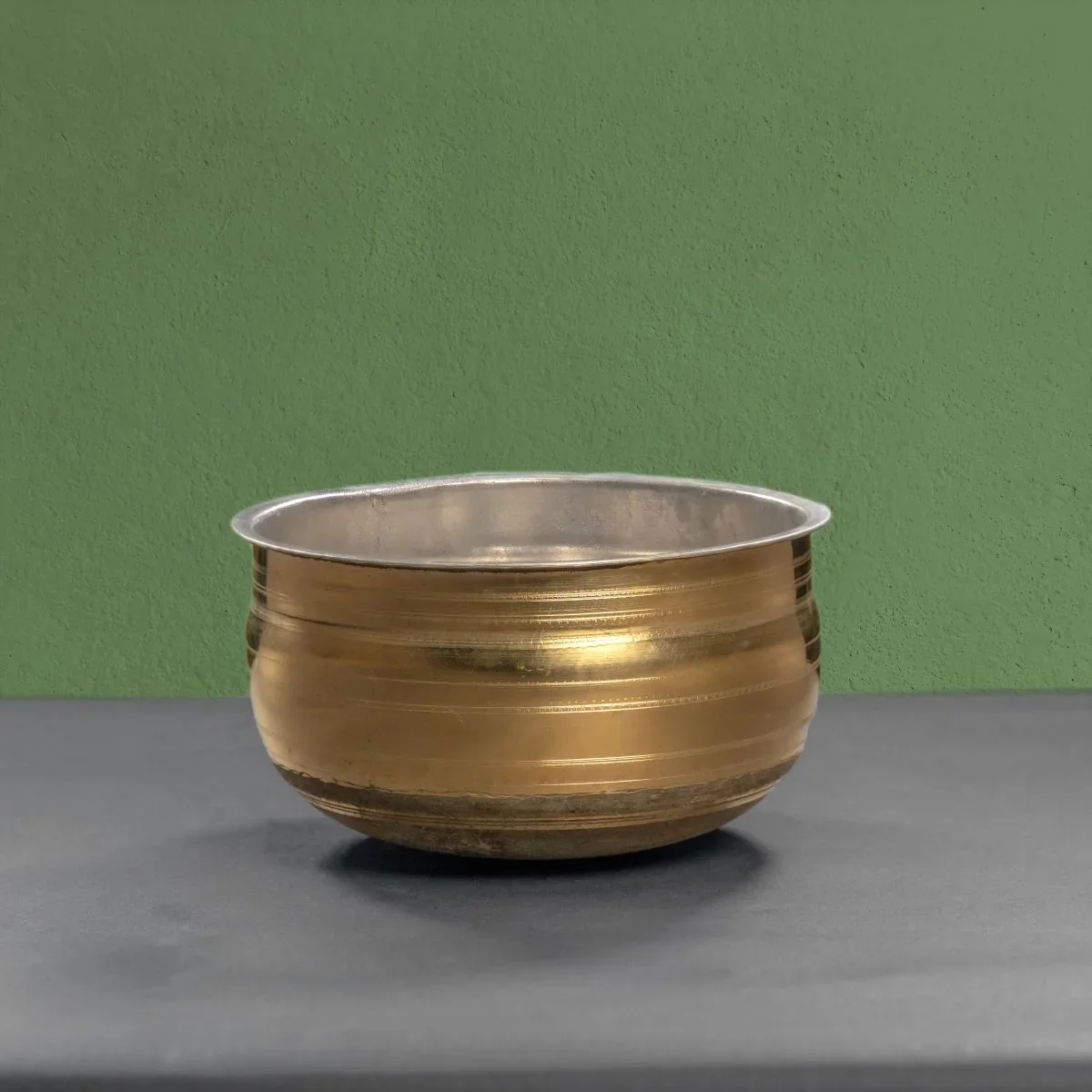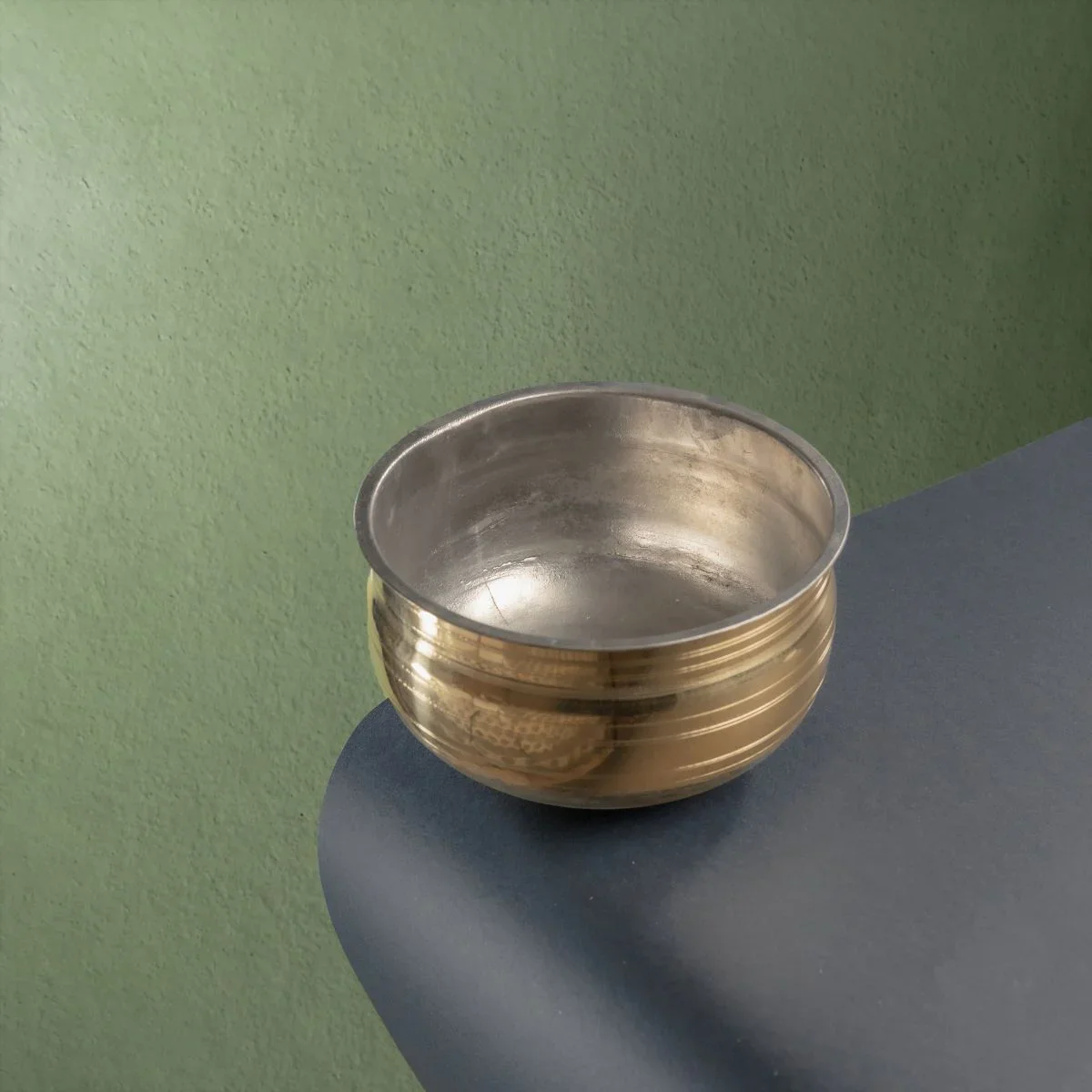
Brass Paraat Large Without Tin Coating (From Jandialaguru)
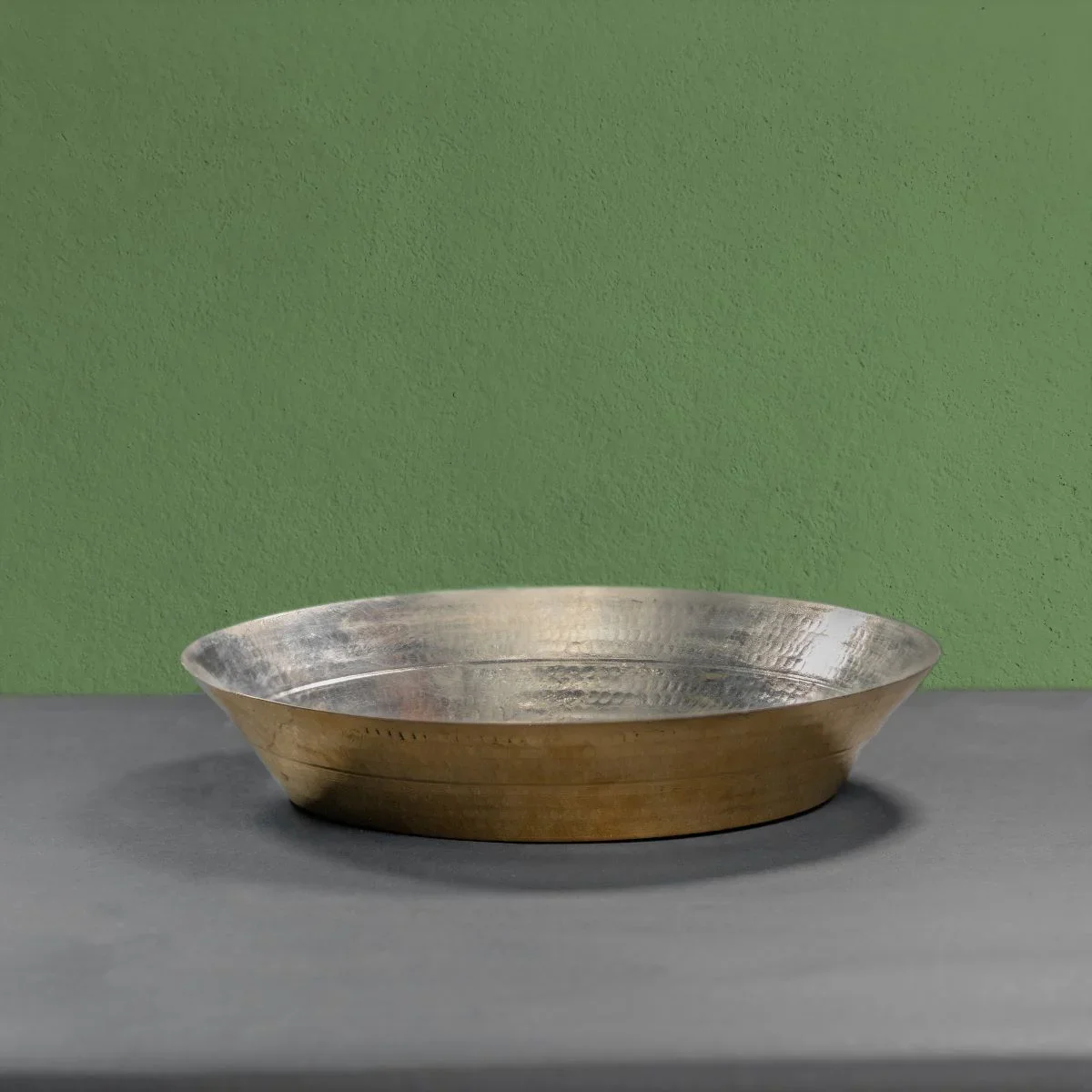
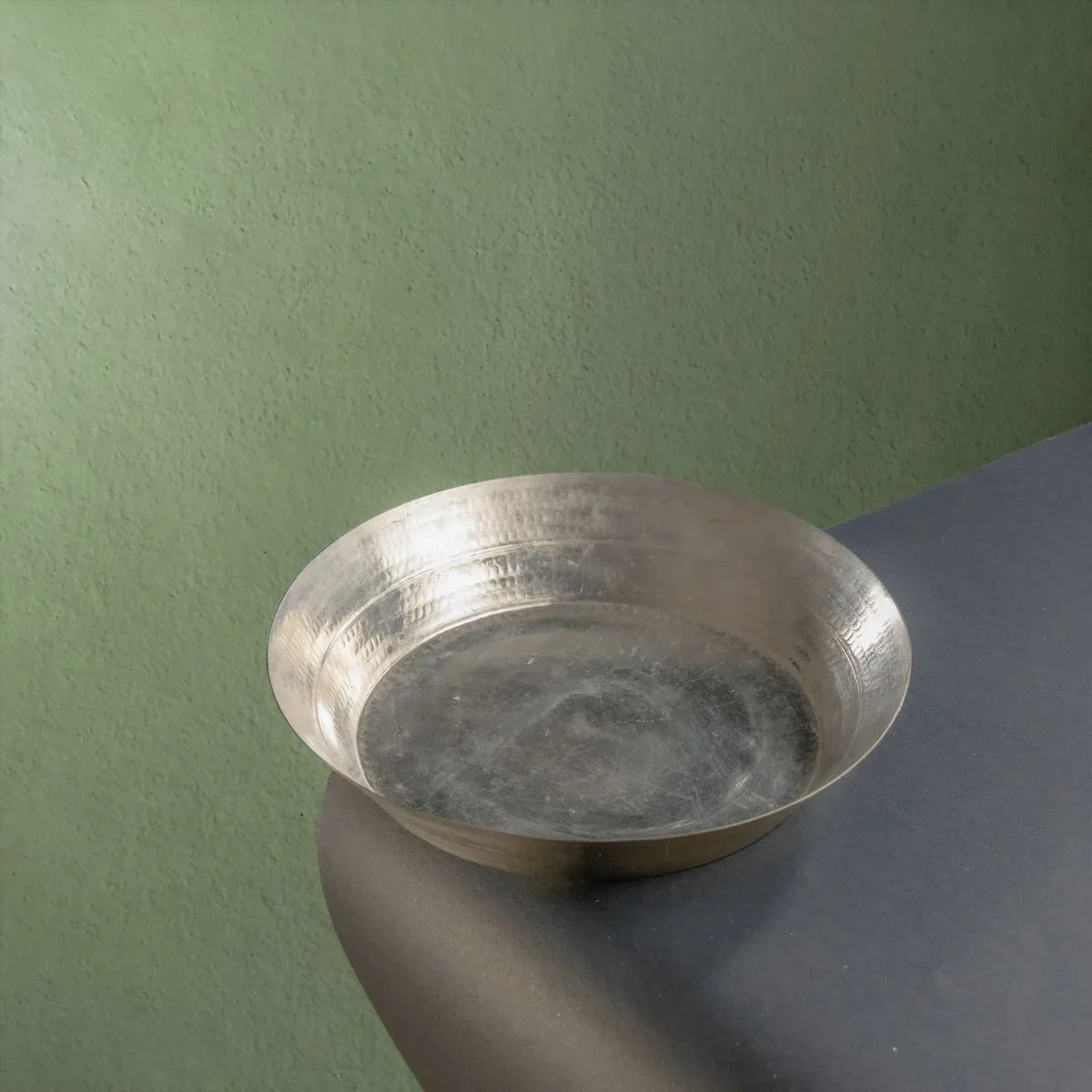
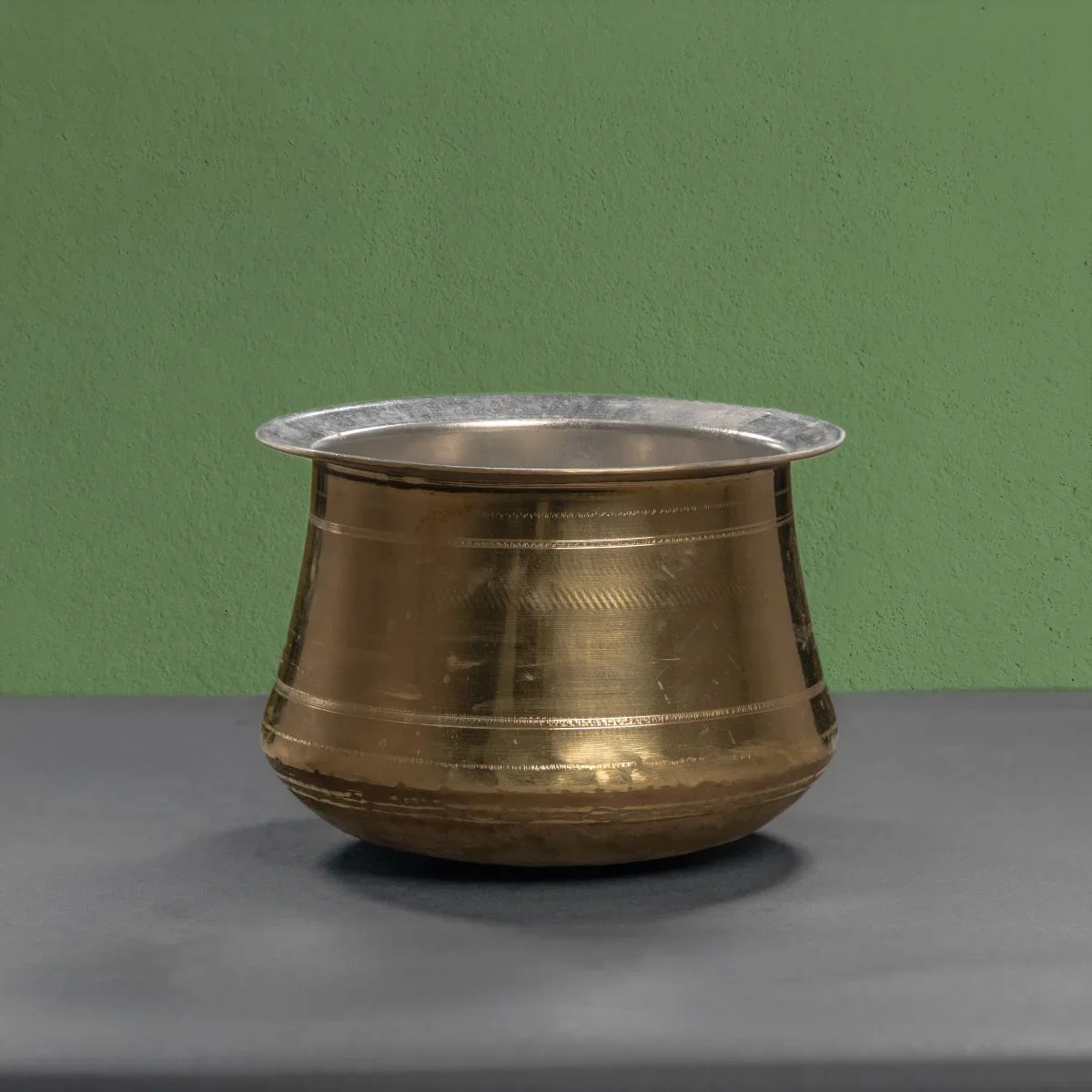
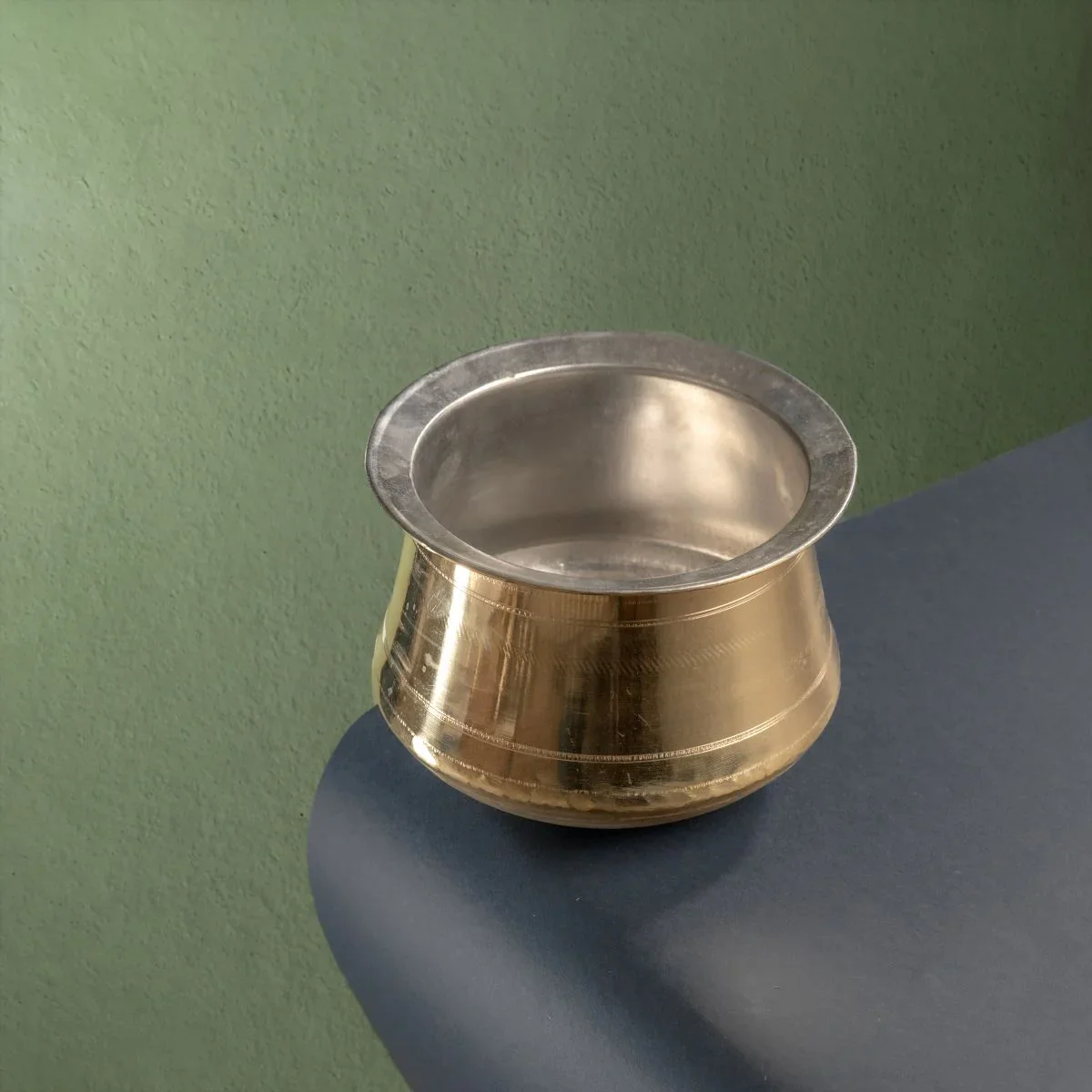
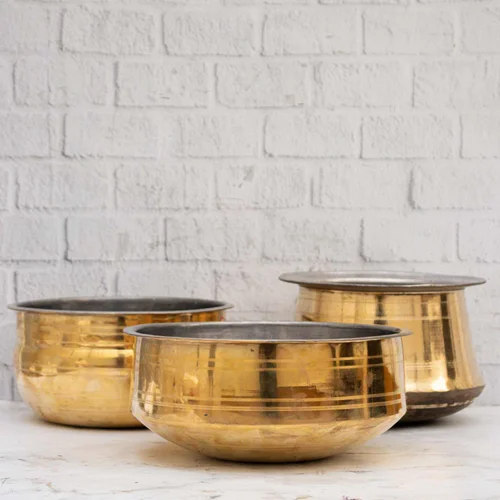
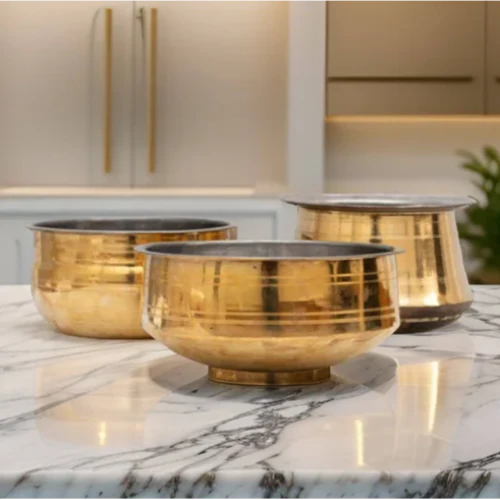
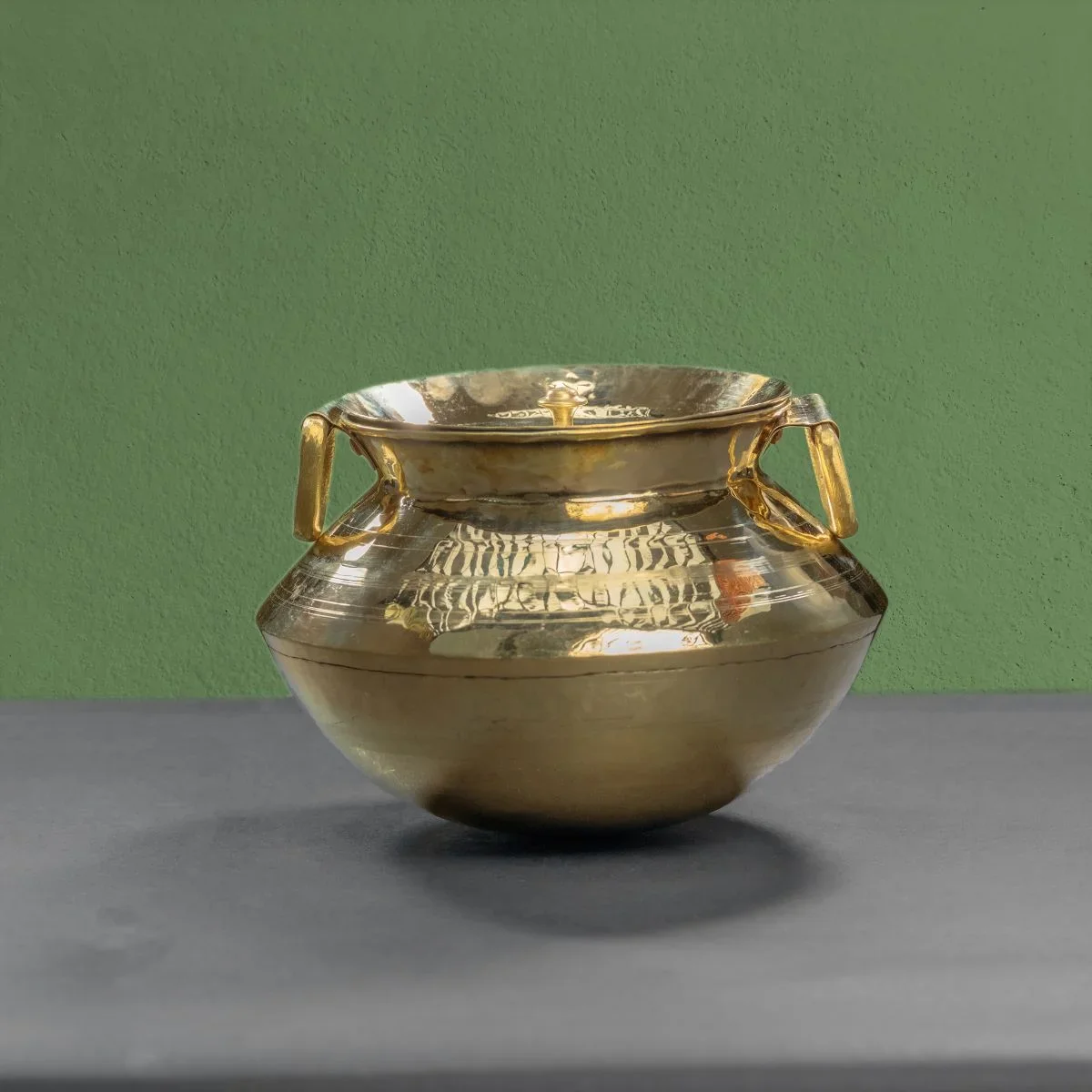
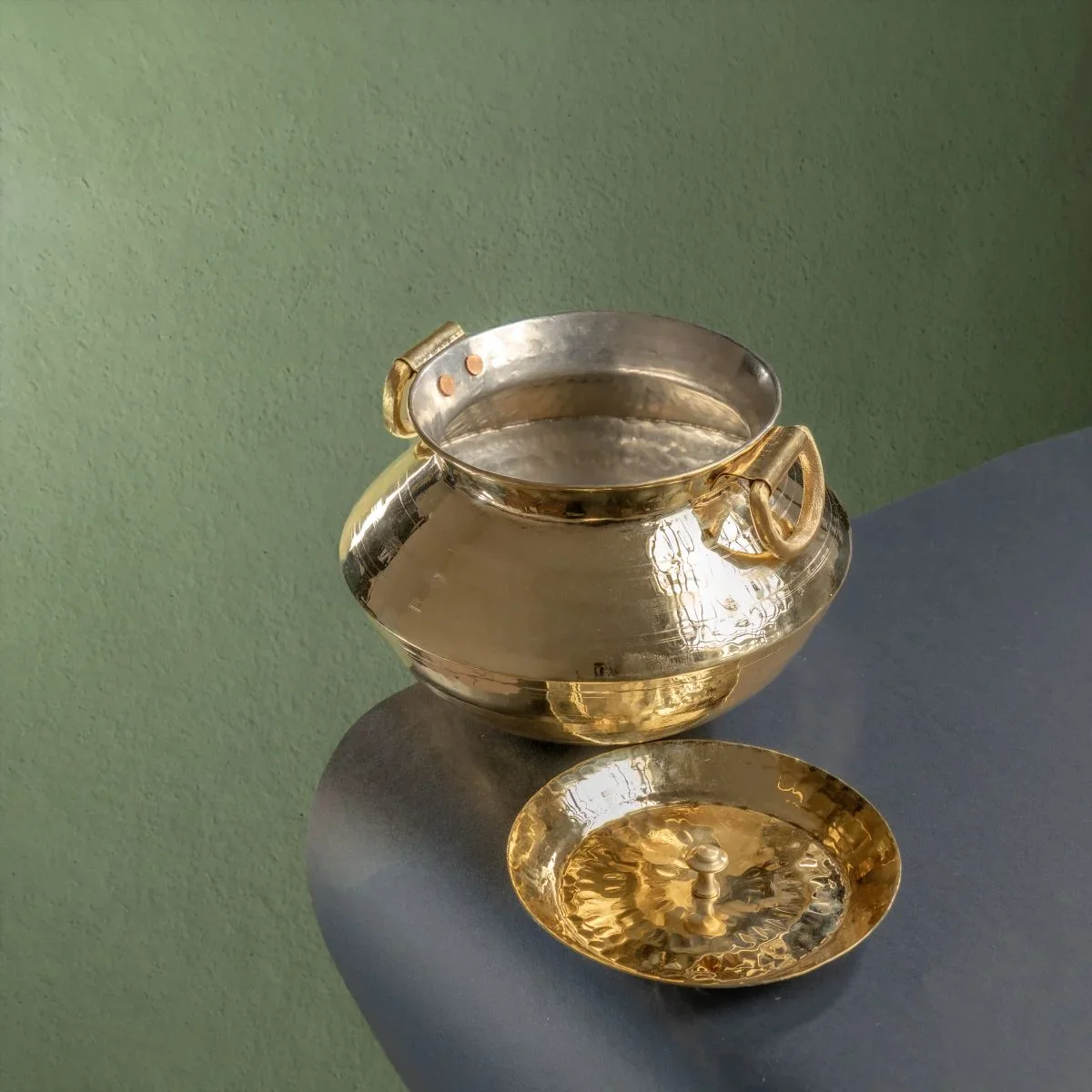
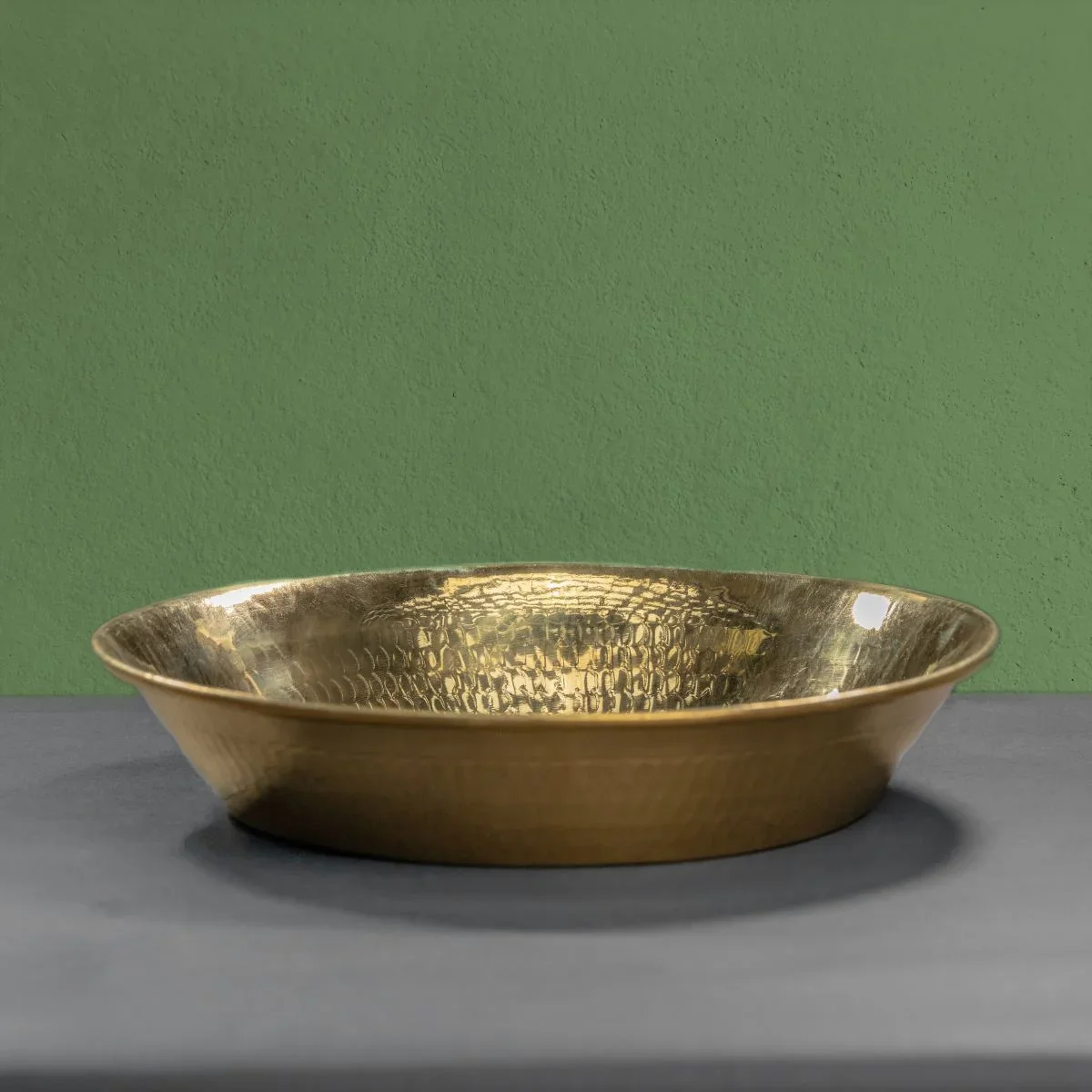
A Brass Paraat is a traditional, large, wide, round, shallow tray with raised edges made of brass, and is used for kneading dough or serving food. It is also called as Pithalai Thambalam (பித்தளைத் தாம்பாளம்) in Tamil.
Handcrafted by the UNESCO recognised Thatheras of Jandiala Guru, this traditional brass paraat celebrates centuries-old Indian wisdom in everyday cooking. Designed specifically for kneading dough, mixing ingredients, and storing non-acidic or uncooked food items, this paraat is intentionally crafted without tin coating (kalai) - exactly as recommended by the artisans themselves for this category of use.
Product Highlights
- Material: Pure Brass (Pital), an Alloy of Copper and Zinc.
- Heritage Craftsmanship: Handcrafted by Thatheras near Amritsar, Punjab, who have been known for their traditional brass and copper utensil-making craft for many generations.
- Design: Large, wide, round, shallow tray with raised edges.
- Size: Large
- Usage: Dough kneading, mixing ingredients, storing fresh rotis, serving.
- Care: Avoid harsh or abrasive detergents. After cleaning wipe it dry immediately to avoid marks on the utensil.
- Note: Brass is generally used with Tin Coating in the cooking process. As per the traditional knowledge gathers from the Thatheras community, for these particular application-dough making, roti storage, the same can be used without tin coating.
Why Choose a Tin-Free Brass Paraat
- Ideal for Non-Acidic Uses- While brass utensils used for direct cooking generally require tin coating, dough kneading and roti storage do no involve acids or high heat, making kalai (tin coating) unnecessary. The Thatheras emphasize this distinction, ensuring you get a safe, authentic, and purpose-crafted kitchen accessory product exactly as tradition intended.
- Preserves Nutritional Value - Brass helps retain natural anti-oxidants and moisture in the atta, resulting in softer dough and better rotis. To know more benefits of Brass, read Key Benefits of Brassware.
- Heavy-Gauge Brass for Stability - The wide, deep, and weight-balanced design ensures ease with kneading large batches of dough.
- Authentic, Durable & Low Maintenance - Without tin-coating, the paraat demands minimal care and remains functional for years.
Frequently Asked Questions
Q1. Does using a tin-free brass paraat affect the dough quality?
Yes, positively. Brass naturally retains the antioxidants and moisture in wheat flour, helping you achieve softer, more pliable dough for rotis and parathas.
Q2. Is this paraat suitable for kneading large batches of atta?
Absolutely. Its wide diameter, deep curve, and heavy-gauge brass provide excellent stability, making it ideal for everyday or bulk dough preparation.
Q3. Will the brass darken over time if there is no tin coating?
A natural patina forms gradually on pure brass. This does not impact usability and is considered normal for authentic metal cookware.
Q4. How durable is a tin-free brass paraat?
Without tin coating, the paraat becomes structurally stronger and more long-lasting, as there is no lining to wear out. It can last for decades with basic care.
Q5. Does the handcrafted hammering improve paraat performance?
Yes. The traditional hammering by Thatheras increases surface strength and rigidity, making the paraat more stable during kneading and resistant to deformation.
A Brass Paraat is a traditional, large, wide, round, shallow tray with raised edges made of brass, and is used for kneading dough or serving food. It is also called as Pithalai Thambalam (பித்தளைத் தாம்பாளம்) in Tamil.
Handcrafted by the UNESCO recognised Thatheras of Jandiala Guru, this traditional brass paraat celebrates centuries-old Indian wisdom in everyday cooking. Designed specifically for kneading dough, mixing ingredients, and storing non-acidic or uncooked food items, this paraat is intentionally crafted without tin coating (kalai) - exactly as recommended by the artisans themselves for this category of use.
Product Highlights
- Material: Pure Brass (Pital), an Alloy of Copper and Zinc.
- Heritage Craftsmanship: Handcrafted by Thatheras near Amritsar, Punjab, who have been known for their traditional brass and copper utensil-making craft for many generations.
- Design: Large, wide, round, shallow tray with raised edges.
- Size: Large
- Usage: Dough kneading, mixing ingredients, storing fresh rotis, serving.
- Care: Avoid harsh or abrasive detergents. After cleaning wipe it dry immediately to avoid marks on the utensil.
- Note: Brass is generally used with Tin Coating in the cooking process. As per the traditional knowledge gathers from the Thatheras community, for these particular application-dough making, roti storage, the same can be used without tin coating.
Why Choose a Tin-Free Brass Paraat
- Ideal for Non-Acidic Uses- While brass utensils used for direct cooking generally require tin coating, dough kneading and roti storage do no involve acids or high heat, making kalai (tin coating) unnecessary. The Thatheras emphasize this distinction, ensuring you get a safe, authentic, and purpose-crafted kitchen accessory product exactly as tradition intended.
- Preserves Nutritional Value - Brass helps retain natural anti-oxidants and moisture in the atta, resulting in softer dough and better rotis. To know more benefits of Brass, read Key Benefits of Brassware.
- Heavy-Gauge Brass for Stability - The wide, deep, and weight-balanced design ensures ease with kneading large batches of dough.
- Authentic, Durable & Low Maintenance - Without tin-coating, the paraat demands minimal care and remains functional for years.
Frequently Asked Questions
Q1. Does using a tin-free brass paraat affect the dough quality?
Yes, positively. Brass naturally retains the antioxidants and moisture in wheat flour, helping you achieve softer, more pliable dough for rotis and parathas.
Q2. Is this paraat suitable for kneading large batches of atta?
Absolutely. Its wide diameter, deep curve, and heavy-gauge brass provide excellent stability, making it ideal for everyday or bulk dough preparation.
Q3. Will the brass darken over time if there is no tin coating?
A natural patina forms gradually on pure brass. This does not impact usability and is considered normal for authentic metal cookware.
Q4. How durable is a tin-free brass paraat?
Without tin coating, the paraat becomes structurally stronger and more long-lasting, as there is no lining to wear out. It can last for decades with basic care.
Q5. Does the handcrafted hammering improve paraat performance?
Yes. The traditional hammering by Thatheras increases surface strength and rigidity, making the paraat more stable during kneading and resistant to deformation.
Original: $29.94
-70%$29.94
$8.98Description
A Brass Paraat is a traditional, large, wide, round, shallow tray with raised edges made of brass, and is used for kneading dough or serving food. It is also called as Pithalai Thambalam (பித்தளைத் தாம்பாளம்) in Tamil.
Handcrafted by the UNESCO recognised Thatheras of Jandiala Guru, this traditional brass paraat celebrates centuries-old Indian wisdom in everyday cooking. Designed specifically for kneading dough, mixing ingredients, and storing non-acidic or uncooked food items, this paraat is intentionally crafted without tin coating (kalai) - exactly as recommended by the artisans themselves for this category of use.
Product Highlights
- Material: Pure Brass (Pital), an Alloy of Copper and Zinc.
- Heritage Craftsmanship: Handcrafted by Thatheras near Amritsar, Punjab, who have been known for their traditional brass and copper utensil-making craft for many generations.
- Design: Large, wide, round, shallow tray with raised edges.
- Size: Large
- Usage: Dough kneading, mixing ingredients, storing fresh rotis, serving.
- Care: Avoid harsh or abrasive detergents. After cleaning wipe it dry immediately to avoid marks on the utensil.
- Note: Brass is generally used with Tin Coating in the cooking process. As per the traditional knowledge gathers from the Thatheras community, for these particular application-dough making, roti storage, the same can be used without tin coating.
Why Choose a Tin-Free Brass Paraat
- Ideal for Non-Acidic Uses- While brass utensils used for direct cooking generally require tin coating, dough kneading and roti storage do no involve acids or high heat, making kalai (tin coating) unnecessary. The Thatheras emphasize this distinction, ensuring you get a safe, authentic, and purpose-crafted kitchen accessory product exactly as tradition intended.
- Preserves Nutritional Value - Brass helps retain natural anti-oxidants and moisture in the atta, resulting in softer dough and better rotis. To know more benefits of Brass, read Key Benefits of Brassware.
- Heavy-Gauge Brass for Stability - The wide, deep, and weight-balanced design ensures ease with kneading large batches of dough.
- Authentic, Durable & Low Maintenance - Without tin-coating, the paraat demands minimal care and remains functional for years.
Frequently Asked Questions
Q1. Does using a tin-free brass paraat affect the dough quality?
Yes, positively. Brass naturally retains the antioxidants and moisture in wheat flour, helping you achieve softer, more pliable dough for rotis and parathas.
Q2. Is this paraat suitable for kneading large batches of atta?
Absolutely. Its wide diameter, deep curve, and heavy-gauge brass provide excellent stability, making it ideal for everyday or bulk dough preparation.
Q3. Will the brass darken over time if there is no tin coating?
A natural patina forms gradually on pure brass. This does not impact usability and is considered normal for authentic metal cookware.
Q4. How durable is a tin-free brass paraat?
Without tin coating, the paraat becomes structurally stronger and more long-lasting, as there is no lining to wear out. It can last for decades with basic care.
Q5. Does the handcrafted hammering improve paraat performance?
Yes. The traditional hammering by Thatheras increases surface strength and rigidity, making the paraat more stable during kneading and resistant to deformation.